

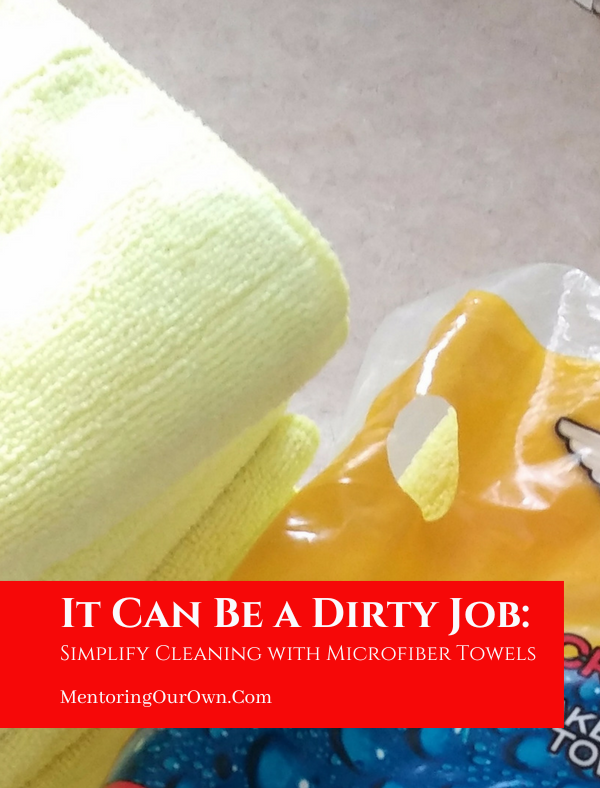
Let’s face it: as homeschool moms, we’re often stretched for time and money. Taking care of a home can be a dirty job, but it doesn’t have to be time-consuming or expensive. I demand a lot from my home management tools, and one of my favorite tools is microfiber detailing towels. My bag of 36 towels has lasted me seven years, and I haven’t even used all of them yet. They can be laundered and reused, making them both economical and sustainable.
Several years ago, a good friend gifted me three microfiber towels for Christmas. She said they would change my life and claimed they could clean almost any surface. At first, I was skeptical. I’d used a microfiber towel before—as a dishtowel—and I didn’t like it. But after talking with my friend, I decided to give them another shot and use them as she suggested.
The Experiment
I started by dusting with a microfiber towel. I used it on my wood blinds, picture frames, hardwood bookshelves, gilt-edged books, door trim, and baseboards. When the towel got full of dust, I took it outside, shook it clean, and resumed dusting. It was amazing how the microfiber towels saved time, cleaned efficiently, and reduced the overall effort needed for dusting. Mirco-fiber and cleaned all those surfaces, and then shook out!
Next, I dampened one end of the towel to tackle fingerprints and sticky spots on woodwork, trim, and walls. After rinsing the towel, it was clean and ready for more. I couldn’t believe how effective it was.
From Dusting to Sparkling Windows
I had been skeptical about using microfiber on glass, especially after a less-than-stellar experience using it on dishes. Initially doubtful but intrigued by its potential, I decided to give the towels a chance on glass surfaces to see if they could redeem themselves. Our sliding glass door was covered in reddish mud from a rain and dirt storm. I didn’t want to scratch the glass, so I wet half of the microfiber towel and gently removed the mud. The towel absorbed the mud without scratching the surface. After rinsing it, I wiped the glass with fresh water and dried it with the other end. The result? Crystal-clear windows without paper towels or chemicals.
Excited, I showed my husband. He used a single towel and a bucket of warm water to clean all 17 windows in our two-story home in just 90 minutes. The windows sparkled like never before.
Beyond Home Use
Later that month, my youngest son completed his Eagle Scout project by cleaning windows at a local assisted care rehab center. He and his team used microfiber towels to clean even the hard-to-reach clerestory windows. Unlike other cleaning methods, the microfiber towels effectively trapped dirt and debris, preventing it from spreading, while their flexibility allowed for thorough cleaning without leaving streaks. The dirt did not just stay on the surface of the towels, like when using other kinds of cloth or paper. The fibers on the towels seemed to just eat the dirt. The sparkling windows brightened the space, lifting the spirits of residents and staff alike. Afterward, my son donated the clean, used towels and the rest of the unused bag of microfiber towels to me. Years later, I still haven’t used all of them!
Sanitizing with Microfiber Towels
Microfiber towels are great for cleaning, but what about sanitizing? Here are some simple, cost-effective recipes to use with your towels:
Vinegar-Based Recipe
- 1 cup water
- 1 cup white vinegar
- 24 drops of essential oil (tea tree, pine, lavender, or lemon)
- Place in spray bottle
Instructions
Alcohol-Based Recipe
- 1 cup rubbing alcohol (isopropyl)
- 15-20 drops of essential oil (tea tree, lavender, or lemon)
Instructions
Colloidal Silver
Instructions
- Wipe the area clean with a microfiber towel.
- Mist colloidal silver onto hard surfaces, keeping them moist for 10 minutes before letting them dry naturally.
Essential oils
- Note: Always use glass spray bottles for essential oil mixtures, as they can react with plastic.
- I use one bottle as an air freshener with a few drops of essential oils in water. The other color I use for sanitizing, and I label the clear plastic lids
- If you have pets, check and see what essential oils are safe around your pets.

Microfiber Care
To keep your microfiber towels in top shape:
- Shake off dust or rinse with hot water before laundering.
- Use liquid detergent and wash in cold to warm water.
- Avoid laundering with lint-producing fabrics like bath towels.
- Air-dry or use low heat in the dryer.
The Bottom Line
Microfiber towels are sturdy, versatile, and economical. They’re perfect for windows, dusting, scrubbing walls, blinds, metal, floors, mirrors, trim, baseboards, and more. With just water and a drop of dish soap, they can tackle even the toughest messes. At less than $0.50 per towel, they’re a budget-friendly, eco-conscious alternative to paper towels (prices and availability are subject to change).
What tough cleaning jobs have you tackled with microfiber towels? One of the toughest jobs I tackled was a mud-blasted sliding glass door after a storm. Initially, I was doubtful that the microfiber towel could handle it, but I decided to give it a try. I hoped the first pass would grab some of the dirt—and to my surprise, it did more than that. With just one rinse, the towel cleaned the glass beautifully, saving me time, energy, cleaning supplies, and even preventing scratches. What’s your microfiber success story? Share your experiences in the comments!
Click Below to Join My Newsletter for more helpful tips on homeschooling, family culture, mom self-care, and home management. Let’s tackle those dirty jobs together!