

This post is the third post in a 3 part series.
As children complete the elementary years, many parents ask, "What's next?" The aim of life is growth, and for children that means growing up. Youth are typically eleven to eighteen years old. The aim of youth is to become. We want to lead, guide, and mentor them to become the person they are born to be. How do we help them become? The answers are not found in workbooks and in textbooks. This is a journey they must take on their own and there are no shortcuts. However, as parents, we can guide and mentor our youth by becoming the best version of ourselves. Here are six ways to help them become.
6 Ways to Help Your Youth Become
B - Books

Books are gateways to becoming. Classics, autobiography, biography, history, and fiction can inform youth about human nature, help them see themself, more clearly, and prepare them to lead.
US President Harry Truman once said, "Not all readers are leaders, but all leaders are readers." I believe that reading good books allows youth to lead themselves onto a better path, even if they do not hold leadership positions. Those who exhibit self-leadership make great leaders and often become great leaders. Reading is a key to helping youth become confident, knowledgeable, and capable leaders.
E = Experiences
Youth need experiences to help them become. Simulations, group experiences, hobbies, mom-schools, and independent scholar projects are but a few kinds of experiences that can help youth become.
Simulations
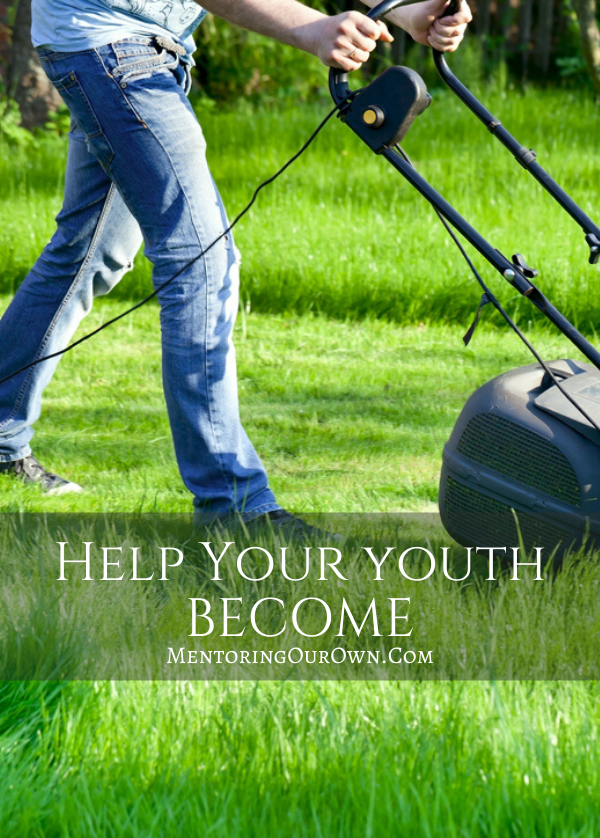
Simulations are simulated experiences that help youth gain understanding and confidence to become. These can be as simple as mowing the lawn at home before starting a neighborhood lawn care business or participating in a mock trial or congress. Participating in simulations can help youth become more confident and learn how to navigate through a sea of diverse ideas.
Group Experiences
Group experiences can help youth become more confident with other people. These group experiences should not be limited to their age peers only. It is important to have group experiences with people of different ages, including adults. Group experiences can help youth become, by fostering social confidence and adaptability with people of varied ages.
Exploring Places and Ideas
Exploring places and ideas can help youth become broadened and more confident in the world.
Hobbies
Hobbies can help youth become by reducing stress, fostering creativity, becoming a more interesting person, and could lead to ideas for entrepreneurship.
Mom-schools
Mom-Schools are classes held by moms for their youths and other youths. These classes offer social growth, expanded learning, and help youth become more confident.
Independent Scholar Projects
Independent scholar projects are youth-driven deep dives into topics of interest. These projects help youth develop self-discipline, expertise, and become more capable, rounded, and confident as a young scholars.
C - Conversations
Conversations are vital to helping youth become. They need to learn the back-and-forth of respectful dialogue and active listening. Engaging in meaningful discussions broadens their perspectives and sharpens their ability to express themselves.
Book Discussions
Book discussions help youth become by encouraging critical thinking and deepen understanding.
Oral Defense
Presenting ideas and fielding questions helps youth learn to think on their feet. This helps youth become by exploring their ideas in a deeper and more connected way.

Presentations
Presentations are a form of conversation that often is one way, presenter and audience. Some of the best presentations are interactive, rather than just a lecture. Teaching others builds communication skills and can help youth become more concise and gain more confidence in their ideas.
Debrief
Post-experience reflections solidify learning by connecting actions to principles. Debriefs help youth become as they learn how to learn from experiences and other forms of conversation.
O - Observations
Developing keen observation skills helps youth become deeper thinkers. This can be fostered through: through doing annotations, commonplace books, essays, experiments, research, and blogging.
Annotations
Annotations are recording your explanations of observations, connections, and thoughts on books or articles a person is reading. Recording thoughts on books and articles deepens analysis, and can help our youth become deeper thinkers.
Commonplace Books
Commonplace books are a common place to put annotations of books being read, experiences, lectures attended, and observations. Keeping a Commonplace book can help youth become by fostering intellectual depth.
Essays
Essays are a form of articulating a youth's observations. Writing essays can help youth become more exact, concise, and strengthen their communication skills.
Experiments
Experiments are observations. When a youth takes anecdotal evidence and experiments on it, the experiment can help youth understand that their perception may or may not apply to others or other situations. Testing ideas teaches youth to refine their thinking. helping youth become clearer in observations, ask better questions, make connections, and come to clearer conclusions.
Research
Research is observation. Youth learn to collect data, sift through the data for the most relevant, draw conclusions, and then report on what they learned. Research can help youth become by enhancining their critical thinking skills and increasing their ability to discern truth from error.
Blogging
Blogging is a form of essay online and is, therefore, observations, as well. Blogging can help youth become more articulate in expressing their ideas and increases engagement with others. Blogging often leads to interaction with the reader. These interactions can help youth become more polished as a writer.
M - Mentors
Mentors provide youth with examples, accountability, validation, and guidance. They help navigate the rough path between youth and adulthood. As parents, we are their first mentors. Yet, additional mentors can help youths navigate the rough territory between youth and adulthood. Mentors can help youth become their better selves.
E - Entrepreneurship
Entrepreneurial experiences prepare youth to become prepared for adulthood by integrating social, academic, and leadership skills. Opportunities include: creating a home business, experiencing internships, participating in campaigns, working for causes, and providing service are all part of entrepreneurship.
Home Business
Creating a home business is entrepreneurship. This can help youth integrate social skills and the academic skills they have learned, making skills relevant and helping youth become prepared for adult responsibilities.
Internships
Internships can be a part of entrepreneurship, by offering hands-on experience in fields of interest. Thus, giving youth the opportunity to gain on-the-ground experience, outside the home, and can help them decide if this is really what they want to do. Internships can help youth become more confident in their chosen field or cause.
Political Campaigns and Causes
Political campaigns and working for causes help youths explore ways to serve in society. They can give youth valuable experience working with people who are passionate about their cause. Working on campaigns and causes teach engagement, service, and public influence, Through campainging and working on causes, youth can become more adept at finding and using their voice.
Service Work
Service work is entrepreneurship, too. In combining abilities to meet the needs of someone else, youths serve others and build character, empathy, and leadership skills. Participating in service or providing service can help youth become a more responsive, compassionate, and better prepared adult.
Helping Youth Become
Helping youth become goes beyond textbook learning. By incorporating great books, diverse experiences, meaningful conversations, keen observations, mentorship, and entrepreneurship, we prepare them for adulthood. We equip them to contribute positively to society and become their best selves.
First in the series: Is Your Child Getting the EDGE They Need
- For Parents of Children Below Compulsory age in Your State.
Second in the series: 5 Ways to SPARK Their Love of Learning
- For Parents of Elementary Age Children