

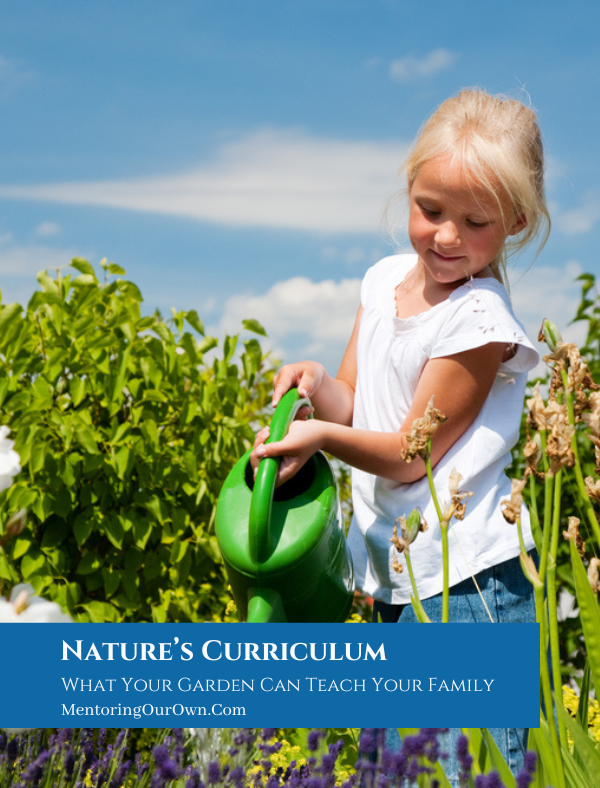
What if your garden is teaching more than you realize?
Beneath the soil and within each season are powerful lessons waiting to be discovered. In fact, your garden may be one of the most effective classrooms your family will ever experience.
Discover 25 powerful life lessons hidden in everyday gardening…
Have you seen the meme going around asking if gardening should be required in schools? Instead of focusing on the idea of making it mandatory, let's consider the rich learning experiences gardening can offer as part of your children’s education.
Growing a garden helps alleviate strain on the food budget, which becomes especially important during times of inflation and supply chain disruptions. There may come a time when we have to rely solely on what we can grow ourselves. That’s why it’s crucial to learn how to garden beforehand.
There are invaluable lessons to be learned in our gardens...lessons from "Nature's God," as our Founding Fathers put it.
Lessons Your Garden Can Teach Your Family
1. The Law of the Harvest: In gardening, as in life, you learn that you reap what you sow
2. The Law of Order: Living things reproduce according to their own kind.
3. The Lesson of Faith: Preparing the soil, planting seeds, cultivating, and harvesting all contribute to the development of faith.
4. Delayed Gratification: Gardening teaches patience as we plant, nurture, water, and wait in faith for our harvest.
5. Nurturing: Growing a garden reminds us that nurturing takes time and care.
6. The Law of Training: Pruning, thinning, and staking teach us that discipline is only part of training. Young seedlings need protection and support...just like people.
7. Wisdom: Gardening instills the importance of planning and making wise choices.
8. The Law of Cultivation: Tending to weeds early results in less work and a healthier garden. Similarly, addressing bad habits early is easier than correcting them later.
9. Proper Gardening: Good gardening practices lead to healthier plants, just as proper training helps develop strong character in children.
10. Neglectful Gardening: Neglecting a garden results in weak plants prone to disease and pests. Likewise, failing to nourish our minds and hearts weakens us.
11. Mulching: Mulch protects and nurtures a garden. Similarly, high standards, healthy boundaries, and positive influences act as the mulch of good parenting.
12. Composting Recycling organic material enriches the soil. Similarly, life lessons and experiences create a rich foundation for personal growth.
13. Companion Planting: Some plants protect others, while some hinder growth. Choosing good companions in life is just as important.
14. Inter-planting: Mixing plants confuses pests and adds beauty. Likewise, diversity in talents and perspectives enriches our communities.
15. Hothouse vs. Homegrown: Homegrown plants are often healthier than greenhouse plants. Similarly, learning at home can be more powerful than in a classroom setting.
16. Extended Seasons Techniques: Starting plants early and protecting them extends the growing season. Similarly, we can extend and enrich learning by exposing children to great ideas and positive role models. We demonstrate this approach to our children from their earliest years, leading by example. Additionally, we engage them in contemplating great ideas, thereby exerting control over the negative influences entering our homes. By proactively choosing to use media that enriches, rather than solely entertains, we extend the season. Family history and journals can also contribute to extending and deepening our children's learning when we draw inspiration from positive role models
17. Sharing our Bounty: Sharing the abundance from our gardens teaches generosity and cultivates a philanthropic and compassionate mindset in our children.
18. Preserving Our Bounty: Learning how to preserve food teaches self-sufficiency, just as keeping traditions, journaling, and embracing provident living preserve our heritage.
19. Time: Gardening takes time and is best done alongside someone else—just like learning and growth.
20. The Lesson of Hope: Looking forward to a harvest teaches our children the value of hope.
21. Self-reliance on the Lord: Ultimately, God is in control. If we live providently, we can endure even when the harvest is scarce..
22. Beginnings: Planting seeds symbolizes new beginnings…just as life, family, and knowledge all began in a garden.
23. Scriptural Understanding: The Bible was written for an agrarian people. Working with the soil makes biblical lessons more tangible.
24. Pondering: Repetitive garden-tasks free the mind for deep thought and reflection.
25. Natural Science: Gardening provides hands-on lessons in biology, ecology, and weather patterns
Whether you just have a windowsill, small patio garden, a backyard plot, or access to a community garden, now is the time to plan. Summer is around the corner, and in northern climates, some plants need to be started indoors soon. Grab a calendar and a notebook, decide what you want to grow, and mark your planting dates. Gardening is not only fun…it’s an invaluable part of your family's home education journey.
Click to Read Related Article: Wild Days: Exploring God’s First Classic
Enjoy the Journey!
If this resonated with you, don’t stop here.
Join my FREE newsletter where I walk alongside homeschool moms—sharing practical guidance, encouragement, and timeless principles for homeschooling, family culture, home management, and mom-life.
You’ll also be the first to hear about new resources, trainings, and opportunities.
Click here to join and not miss the next step.