


Most people think the Bible is God's first classic. In the beginning, before the Bible was written, God created the heavens and the earth. The creations of God were His first classic. There are many lessons to be found in studying His creations.
What is a classic? A classic is a work that you can return to, again and again, and learn something new from it each time,, and can change you for the better. God's creations are such classics! There is always something to learn from His creations. There are also moral or character lessons in found in nature.
What are Wild Days? "Wild Days' is a phrase coined in "Wild Days: Creating Discovery Journals," by Karen Rackliffe, a veteran home school mom who used the Charlotte Mason Education Method and who promotes nature journaling. Wild Days are the days and times we spend in the outdoors, exploring nature.
Has the season's weather kept your family inside? Are your children driving you crazy being homebound? One good thing about the weather, it is soon to change! This is the perfect time to begin venturing outside. I love how the weather changes just as we need it! When the weather begins to warm, it is normal to want to be outside. I feel God created us that way! Instead of panicking with, "What about the curriculum?" Make this annual seasonal change part of their curriculum! Hiking and park time, even in urban neighborhoods, are Physical Education (PE) & Health. Nature Studies is the foundation of the study of Natural Science.
Bonus! Physical activity is also vital to developing bodies and minds, especially attention span, brain-body balance, visual pathways, and executive function development!
Bonus! Studies have shown that nature is good for both mental health and physical health.
Three Ways to Explore God's First Classic
I. Park Days, Outdoor Play and their Impact on Development
Park days are more than an opportunity to play and socialize! Organized, adult-led sports practice is no substitute. Time spent climbing, spinning, swinging, walking, running, jumping, balancing, sliding, brachiating, and crawling are not just mere child's play. These activities help develop brain-body balance for attention span, develop the visual pathways for reading, develop fine motor dexterity for writing, build coordination, expend pent-up energy, prepare the brain for academics, help develop executive functions, and more. Developmental psychologists are seeing that the early academic focus of the last 30 years has resulted in fewer essential free-play opportunities. This has led to a rise in ADHD diagnosis, which in turn can result from a lack of executive function developing activities.
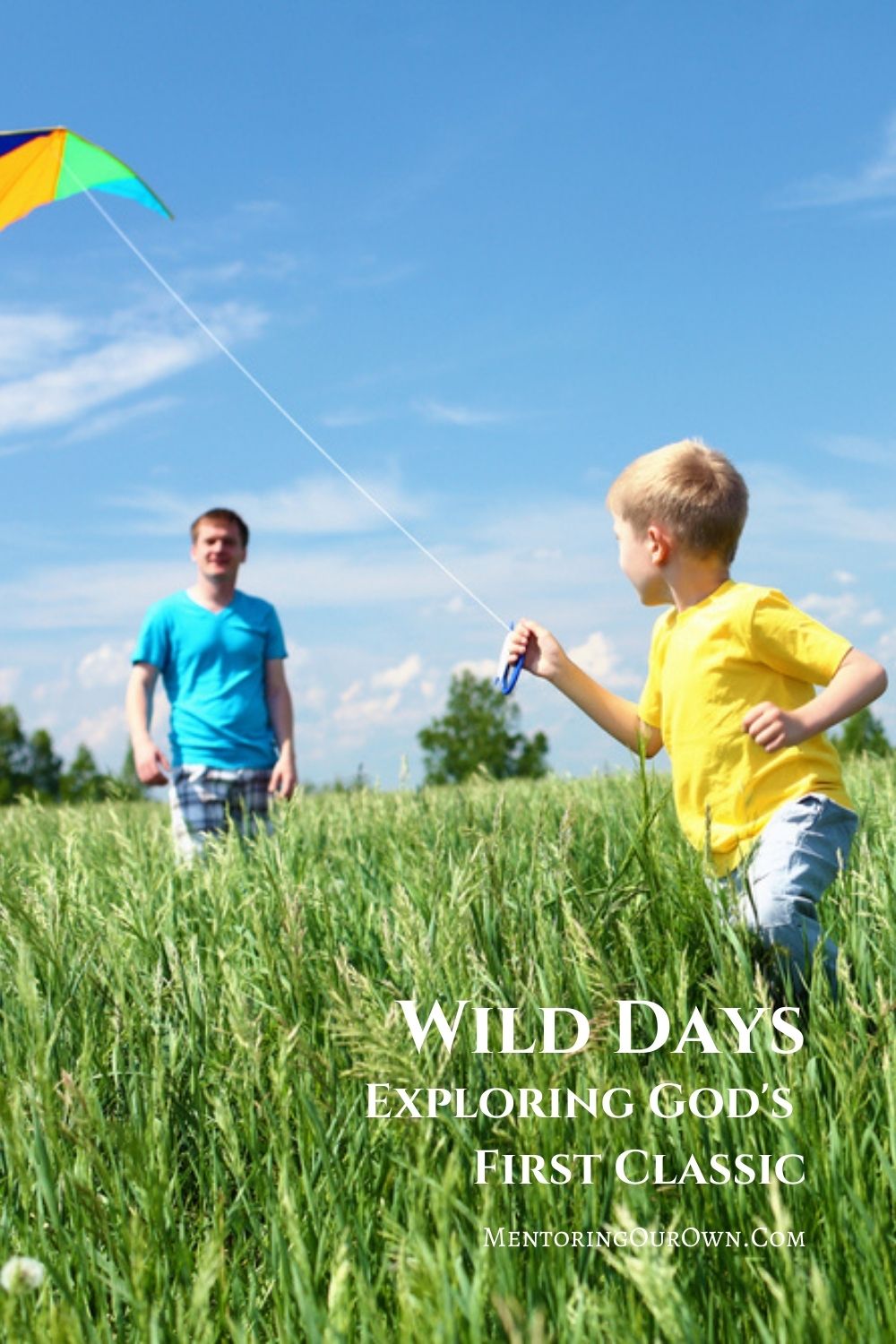
Studies show that if we delay academics until age 8 we can eliminate about 73% of ADHD symptoms through 11 years old. While early academic focus seemed promising, giving young children the edge, that edge is usually lost by fourth grade. About fourth grade is when children with play-based focused early experiences, sailed past their early academics peers.
The loss of physical outdoor play is also compounded by a reliance on screens to calm children. For many children, this results in a loss of focus, a loss of attention span, and a scattered brain that is overstimulated. Computer games and screens tend to build the more primitive part of the brain, the area of impulse. This may be great for fighter pilots, but not for most children. This is done with the sacrifice of development to the part of the brain that makes us most human, the frontal lobe, where executive functions develop. Scientists are seeing delayed development and atrophy of this area of the brain in children who spend hours on screens. Executive functions are higher-level cognitive skills, self-control of behavior, impulse control, attention, inhibitory control, planning, problem-solving, decision-making, working memory, cognitive flexibility (being able to switch between tasks), and more. Screens are not evil. However, we cannot let them displace the important self-initiated physical play needed for children's healthy development.
If our children are struggling with Executive Function, they may need more free play outside, even if they are beyond preschool years. I believe in neuroplasticity (the ability of the brain to create new neuropathways) that the brain can continue to grow, develop, and make new connections.
II. Nature Walks and Nature Studies
This is the perfect time to begin nature studies. Children can view plants, animals, rocks, and insects in any season. The changes in weather can happen fast and make for the perfect science curriculum fueled by children's natural curiosity.
If children learn to keep a nature notebook or a discovery journal, drawing, writing, graphing, classification, and more can be part of the curriculum, naturally. When mom keeps a nature journal, she sets a pattern to emulate and she leads the way! This sets the tone for providing supplies for nature notebooking.
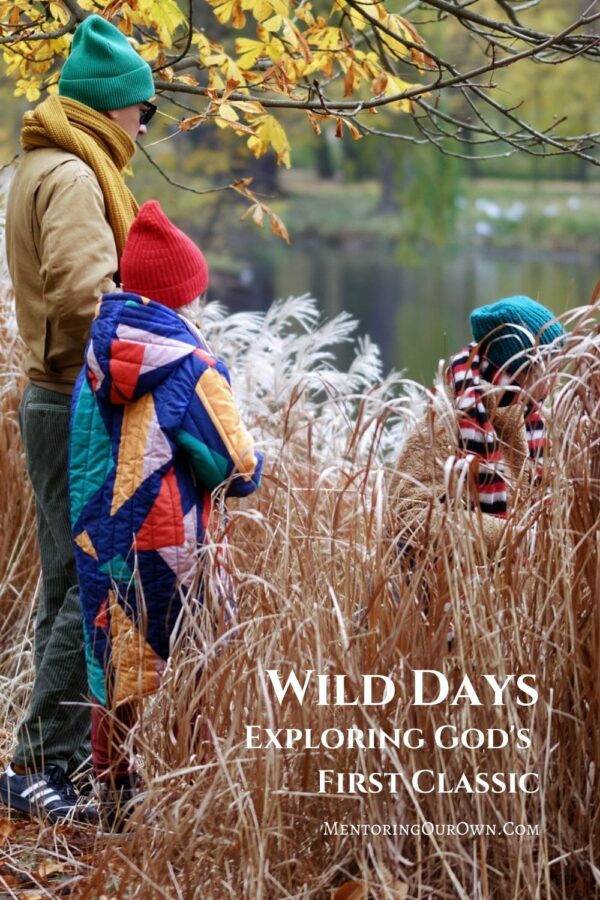
I believe that Charlotte Mason was wise in advising parents to have their children spend as much time outside as possible in different weather. Yes, "whether the weather be fine, or whether the weather be not..." Just bundle up if it is cold, wear rain gear if it is misty moisty outside, and wear lightweight fabrics in the heat! You can come home and cool off. Take meals outside when you can. Take walks and nature walks. Grow a garden. Slow down and do less and the results will be more. This is not something to add to a busy life. Let this be part of the curriculum for the seasons.
III. Gardening
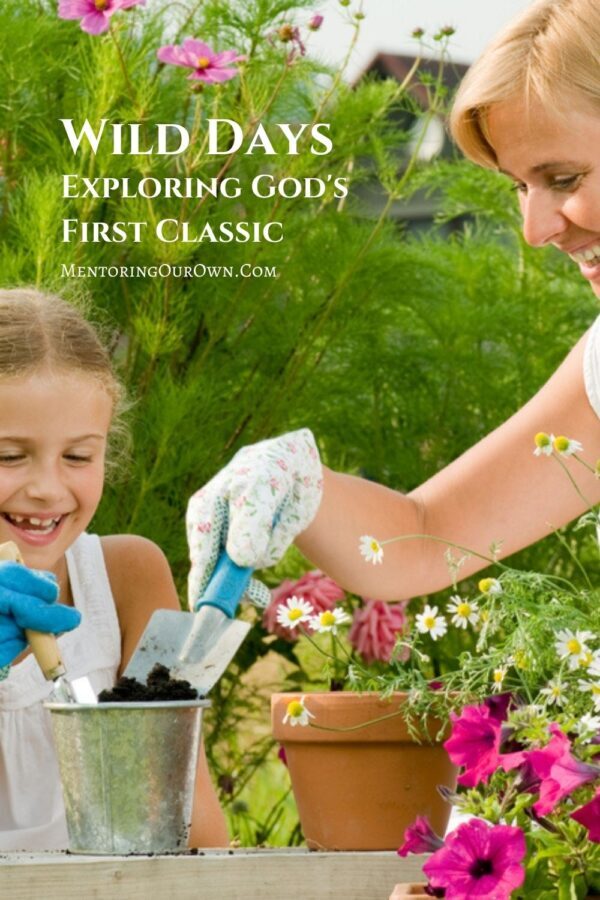
Consider growing a garden this year, whether you till up part of your yard, make layers of lasagna gardening, Hügelkultur, permaculture, squarefoot gardening, or do container gardening. Now is the time to plan! Plant spring crops like peas, spinach, and lettuce, or start seeds inside, in containers.
We live at almost 4,800 ft above sea level. So, we have to start some plants inside.
Gardening or Horticulture, not only provides food of known quality, the potential for peak nutrients, and exercise, but gardening also provides a springboard into natural sciences and important life lessons. There is also a multitude of curriculum benefits to gardening!
21 Lessons a Garden Can Teach
2. Delayed gratification.
3. Planning.
4. We can do hard work.
5. Systems.
6. Attention.
7. Seasons.
8. How food grows.
9. Beneficial insects.
10. Birds.
11. Rodents.
12. Weather.
13. Lunar cycles.
14. Plant in one season, reap in another.
15. Teamwork.
16. Companion Planting.
17. Last year's harvest is past, we cannot change that. This year's harvest is not yet, but we can plan and work for it.
18. Cooperation.
19. Weather.
20, We reap more than we sow.
21. We are reliance on God.
For those who look deeper, there are spiritual lessons, life lessons, and so much more...
Consider how meals Al fresco (outside), nature study, park days, and gardening can revamp your curriculum this season. Instead of fighting the urge to be outside, why not consider making the four seasons part of the curriculum? Work, play, eat, and explore! Make the world part of your classroom, learn from the master teacher, and ...
Whatever you do...
Enjoy the Journey!
If you've found value in what I've shared here, I warmly extend an invitation for you to subscribe to our FREE Newsletter. Inside, you'll discover a wealth of helpful tips tailored specifically for home-school moms. Explore a range of topics including homeschooling, family culture, mom culture, and effective home management strategies. Stay in the loop with updates on site news, upcoming events, new products, and exclusive offers. Come join us on this journey, and don't forget to spread the word to your friends so they too can benefit from our community!