

This is Step 1 in our Homeschool Success Series:
- Step 1 – A Clear Vision
- Step 2 – Momculture
- Step 3 – Record Keeping
- Step 4 – The Foundation (You are here)
- Step 5 – Check the Pulse
- Step 6 – The MAP
This post is the fourth in a series of six simple steps to help you rock your homeschool and enjoy a wonderful year.
Over the past few weeks, we’ve focused on discovering what truly matters, clarifying your vision, building a healthy momculture, and establishing simple record keeping.
Family life and education are always works in progress.
Now that you understand why you homeschool, what matters most, and where you’re headed—you may feel ready to jump into curriculum or fill your calendar with activities.
But not yet.
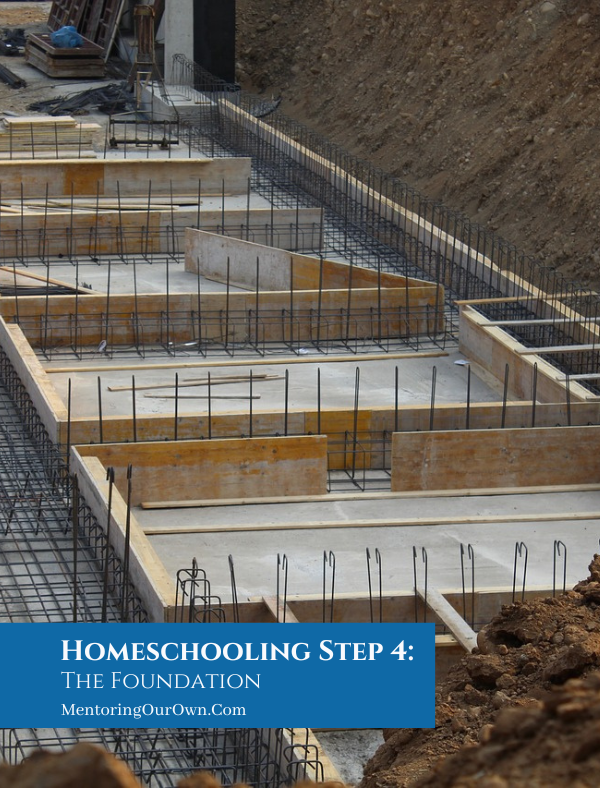
Before you build your homeschool, you need to build your foundation.
Proverbs 14:1 reminds us, “Every wise woman buildeth her house: but the foolish plucketh it down with her hands.”
Many veteran homeschoolers recommend a season of “detox” (often called deschooling) when transitioning into homeschooling. This isn’t a time to check out or fill the day with screens. Instead, it’s a time to reset rhythms, restore relationships, and begin laying a strong foundation at home.
A helpful rule of thumb: allow about one month of detox for every year a child has been in formal schooling (including preschool).
This is also a precious time to really get to know your children, how they think, what they love, and how they learn, so you’re ready for what comes next.
Below are twelve foundational concepts to help you begin.
Homeschooling Step 4: The Foundation
One Dozen Foundational Concepts to Consider:
Building a strong foundation may feel like work at first, but it will make parenting and homeschooling far easier in the long run.
1. Family Devotions
I wanted my children to learn to discern between right and wrong and to nurture hearts toward God. I worked to keep this time consistent, sincere, and age-appropriate; reading, praying, singing, and serving together.
2. Family Mealtime Traditions
Eating together as a family was important to me. It became a time to nourish hearts, bodies, minds, and relationships. I worked to protect this daily rhythm..
3. Family Read Aloud time
I loved when my mother read to me, and I wanted to give that same gift to my children. Read-aloud time stirs hearts, minds, and imaginations. I found that short, daily reading was far more effective than occasional marathons.
4. Training up a Child in the Way They Should Go
This became the pathway to independent work and strong character.
- Discipline of Habit (ages 0–8+) walking, eating, table manners, dressing, hygiene, making the bed, tidying, gratitude, and helpfulness. This is not a checklist—it’s a lifestyle of modeling, guiding, and training.
- Family Work (ages 3–8+): working side by side—meal prep, laundry, cleaning, gardening. This builds connection and capability.
- Dominion Training (ages 8–12): more focused, one-on-one training—planning meals, cooking, laundry from start to finish, basic home and life skills. This includes everything you do to run the home, including budgeting and grocery shopping.
- Transition to Dominion (ages 12–14): increasing independence in domestic things and academics with guidance, regular check-ins, and accountability.
- Dominion (ages 12–18): children take ownership—managing responsibilities, contributing meaningfully, and mentoring younger siblings.
As you can see, we moved away from what I came to view as a false home economy—assigning chores with incentives and expecting young children to work independently in the early years.
Over time, I found this approach often led to procrastination, a weakened work ethic, and, too often, “chore wars” when incentives stopped working and had to be replaced with pressure or consequences.
Instead, I discovered that children thrive with example, consistency, and careful, side-by-side training.
We moved toward a more cooperative home economy, one built on leading, mentoring, and training; where children learn to work with us before they are expected to work on their own.
5. Leisure to Learn
In a screen-filled world, I learned to protect time for wholesome boredom. This space sparks curiosity, creativity, and deep thinking. When we don’t over-program our children, we give them the gift of learning how to think.
6. Family Recital
I wanted my husband to be involved despite a busy work schedule, so I created a family recital night. It became a special time to share projects, recitations, music, and presentations in a safe and encouraging environment.
7. Quiet Time
I needed margin in my day. Quiet time became a lifesaver. After lunch, a walk, and a read-aloud, we rested. Each child spent 60–90 minutes reading, drawing, writing, or building. No screens; just calm, restorative time.
8. Family Fun
Play is not a reward; it’s essential. It strengthens relationships, develops minds and bodies, and builds family culture. We made time for games, outings, movies, hikes, and shared experiences..
9. Wild Days
Time outside was one of our greatest teachers. Nature provides both the classroom and the curriculum. Regular outdoor time brought peace, wonder, and endless learning opportunities..
10. Crazy Days (field trips)
My mother used to say, “I’m going crazy—want to come?” Life became an adventure. I carried that into our homeschool with spontaneous and planned outings—errands, concerts, hikes, and field trips. Learning came alive.
11. Cultural Refinement
Even on a limited budget, my mom exposed us to enriching experiences. I did the same; museums, plays, concerts, fairs. These moments cultivate appreciation, creativity, and perspective.
12. Bedtime Routines
Children will stay up forever if we let them. Ending the day with connection brings peace and security. Bedtime became a time to speak love, build relationships, and prepare for restful sleep, for them and for me.
Stay tuned, and as you consider these ideas, remember—enjoy the journey!
Next week, we’ll focus on Checking the Pulse—learning how to gently assess what’s working, what’s not, and how to make simple, life-giving adjustments..
Links to the previous posts in the Homeschool Success Series: How to Start Homeschooling: Six Ways to Rock Your Homeschool!
Step One: A Clear Vision. Here
Step Two: Momculture. Here
Step Three: Record Keeping. Here
Enjoyed this post?
I’d love to invite you to subscribe to our FREE newsletter created especially for homeschool moms. Each issue is filled with practical tips and encouragement on homeschooling, family culture, mom-life, and home management.
You’ll also stay up to date on site news, upcoming events, new resources, and exclusive offers—plus receive ongoing inspiration to help you thrive on your homeschool journey.
Feel free to share it with friends who would love this community too!