

This is Step 3 in our Homeschool Success Series:
- Step 1 – A Clear Vision
- Step 2 – Momculture
- Step 3 – Record Keeping (You are here)
- Step 4 – The Foundation
- Step 5 – Check the Pulse
- Step 6 – The MAP
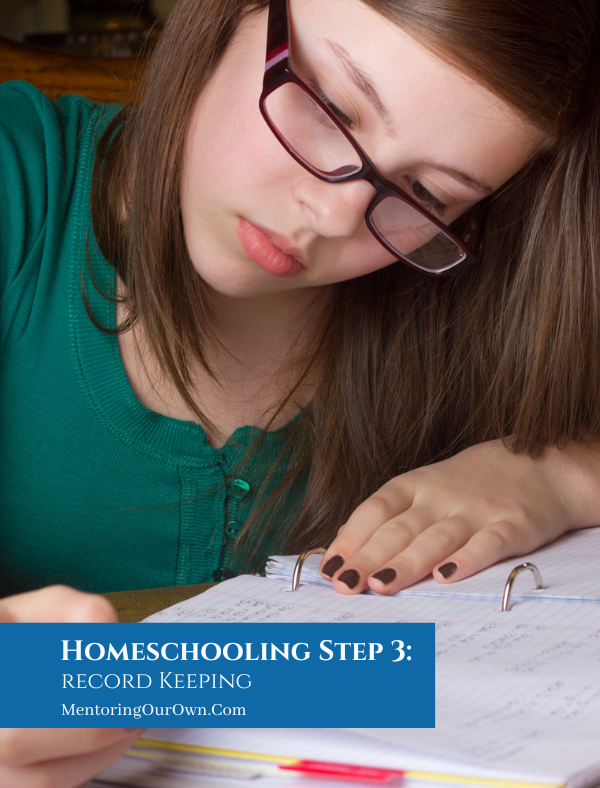
This post is the third in our six-part Homeschool Success Series—How to Start Homeschooling: Six Ways to Rock Your Homeschool!
Over the past few weeks, we’ve focused on your why, what matters most to your family, envisioning your destination, and building your momculture. Now we’re ready for the next step—record keeping.
Homeschooling Step 3: Record Keeping
I know—you haven’t bought curriculum yet. You’re not even ready to jump into academics.
You already have plenty to record.
Whatever method you choose, learn it and make it a habit. Once that habit is in place, begin involving your children. As they learn the pattern alongside you, it prevents overwhelm and builds valuable lifelong skills.
3 Easy Ways to Keep Homeschool Records
1. A Commonplace Book
The simplest form of record keeping is a commonplace book—a common place to jot down what you want to remember.
I use a simple composition book. At the top right corner of each page, I write the date. Then I divide the page into three sections:
- Top-- Momculture Segment:
What did you do for your momculture? Did you learn something new? Read? Practice a skill or develop a talent? - Middle- Family Segment:
Family learning: Bible reading, read-alouds, nature walks, cross-body exercises, cooking, cleaning (yes—that’s education too!).
When the time comes, this is also where you’ll record lessons from The Power of an Hour or any resources you choose. - Bottom-- Individual Segment:
One-on-one time with each child. Aim for about 15 minutes a day.
Listen, build, read, or play together.
This simple habit becomes a boon when academics begin. That same 15 minutes becomes the perfect space for reading, penmanship, or math lessons.
As children grow, they can begin keeping their own commonplace books—recording what they’ve learned, their one-on-one lessons, sibling activities, and personal projects.
2. Universal Homeschool Record Keeping System
As your children grow, you can expand into a more detailed and annotated system..
We created a Universal Homeschool Record Keeping System with portfolios for ages 6–8, 8–12, and 12 through adulthood. These include pages to track books read, field trips, lectures, reports, learning commitments, and more.
- Family Scholar Portfolio
Ideal for families with younger children. It captures both family learning and individual activities.
It’s also helpful for states that require documentation, giving you an organized record of learning.
- Aspiring Scholar Portfolio
Designed for children in the “love of learning” phase.
It tracks studies, activities, and progress—perfect for building transcripts or demonstrating learning.
- Personal Scholar Portfolio
Great for moms and older students.
Provides a detailed paper trail of a rich, well-rounded education and can be used forto create transcripts.
Each level helps children gradually take ownership of their learning.
3. Digital Portfolio
Homeschool life is full of meaningful moments; not all of them fit on a shelf!
A digital portfolio is a simple way to capture it all:
- Take photos of learning in action: nature walks, field trips, projects, read-aloud time, teamwork, and everyday moments.
- Snap photos of written work, projects, and three-dimensional creations.
- Record audio or video of recitations, presentations, or performances.
- Store everything in digital folders, organized by child and date.
At the end of the year, invite your child to help choose which digital records to keep. This builds reflection and ownership.
My Favorite Approach: A Blend
Personally, I prefer a blend of all three methods.
The commonplace book gives you a simple daily record.
The portfolios organize and preserve learning.
The digital records show it in action.
Together, they create a clear, meaningful picture of your homeschool, without overwhelm.
A great place to start?
A simple commonplace book..
Record keeping doesn’t have to be complicated. Just take a moment to jot it down.
Whichever method you choose—enjoy the journey!
Invitation
If you’ve found value in this post, I warmly invite you to subscribe to our FREE newsletter.
You’ll receive encouragement and practical help for homeschool moms—covering homeschooling, family culture, momculture, and home management.
Stay updated on new posts, events, products, and special offers.
Links to the previous posts in the Homeschool Success Series:How to Start Homeschooling: Six Ways to Rock Your Homeschool!
Step One: A Clear Vision. Here
Step Two: Momculture. Here